We Need to State the Obvious: Why the Death of Physical Media is Bad
"The worst PlayStation news is always the next one. The death of physical media and the shutdown of digital storefronts put game preservation and digital ownership in critical jeopardy."


The worst PlayStation news is always the next one. No matter how bad a piece of news was, they will always find a way to make it worse next time.
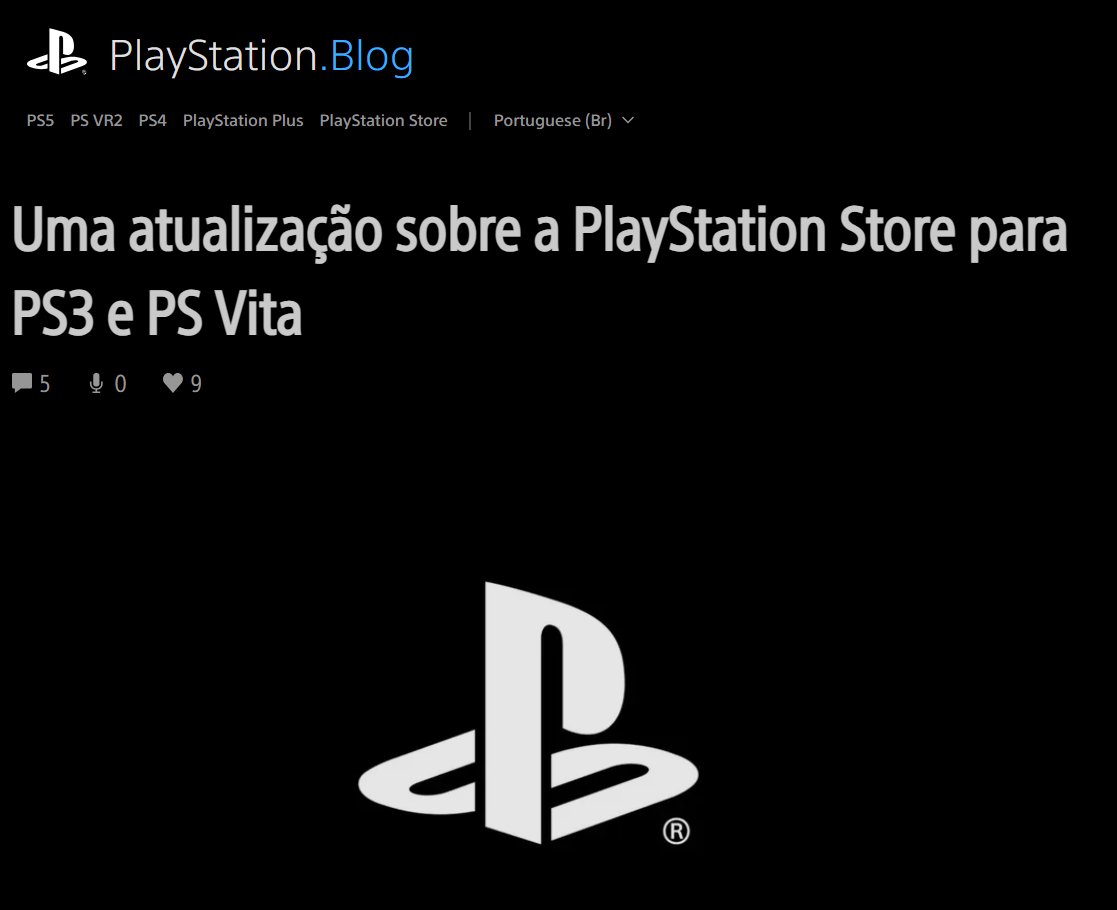
And that’s exactly what happened on July 1st, 2026. They announced that they will stop manufacturing physical media for games released from 2028 onwards, and simultaneously announced the shutdown of the PS3 and PS Vita digital stores.
Buy exclusively from our digital storefronts, but remember: we can take them down whenever we want!
“You’ll own nothing and you’ll be happy.”
That phrase, written by Ida Auken in the essay “Welcome to 2030,” was widely popularized by the World Economic Forum. And it accurately describes the era we are currently living through.
A few years ago, digital stores began adopting a bizarre paradigm: your games do not belong to you. You don’t purchase games; you merely acquire a temporary license to use them. This grants corporations the legal power to pull the plug whenever they see fit.
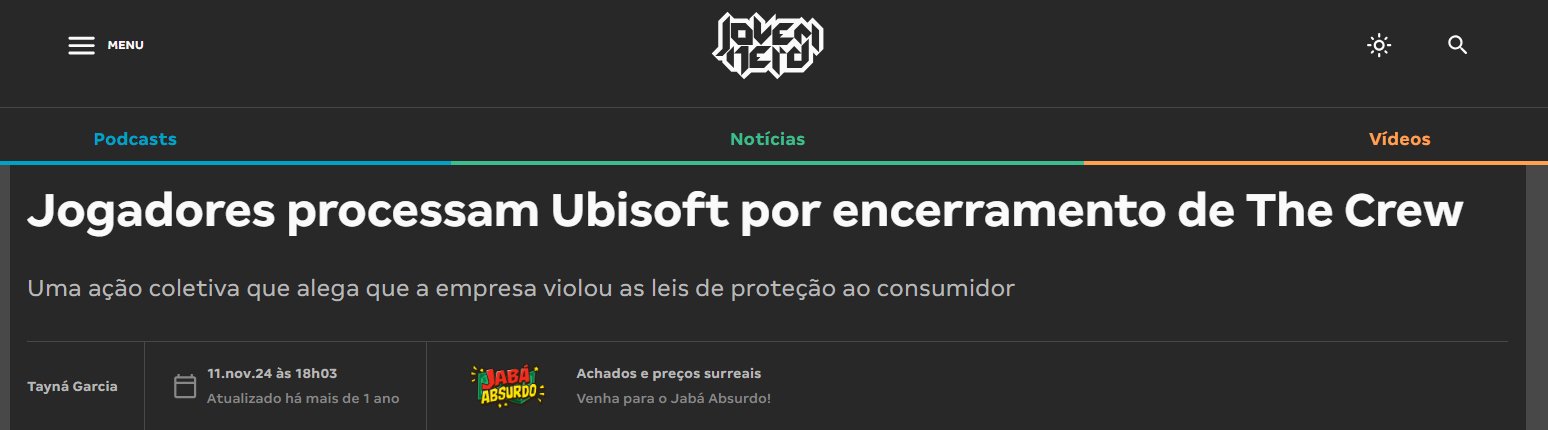
Back in 2024, Ubisoft decided to shut down the servers for The Crew, an always-online racing game. Not only did they make the game completely unplayable, but they also refunded recent buyers and shortly thereafter began actively revoking the game from existing owners’ libraries. That outrageous move sparked the global Stop Killing Games movement.
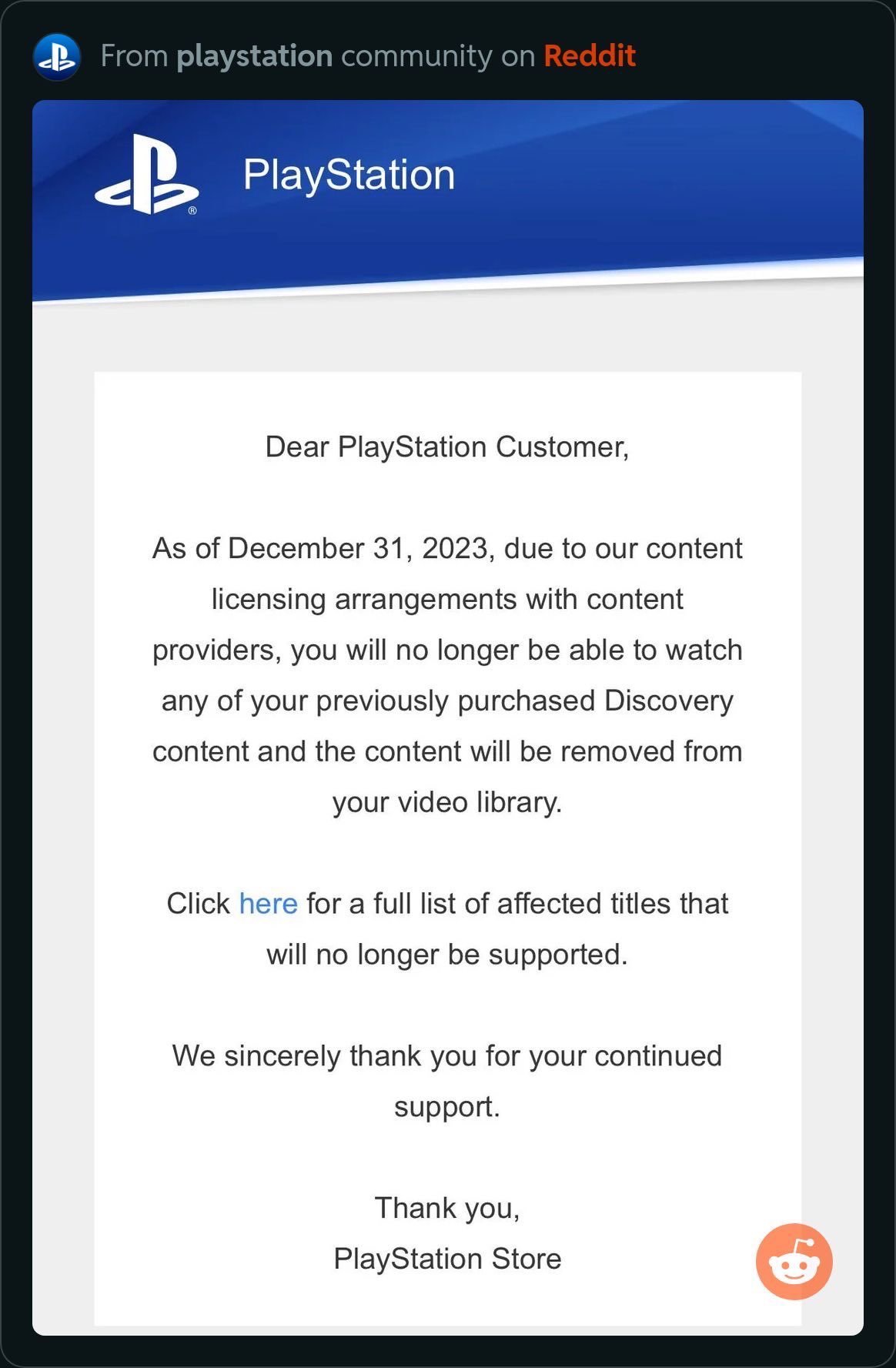
Ubisoft’s decision set a dangerous precedent, yet the situation grows even more alarming beyond gaming. This digital vulnerability extends to all forms of modern entertainment. Recently, PlayStation announced the removal of 551 Discovery titles that users had PURCHASED. The kicker? Zero refunds offered.
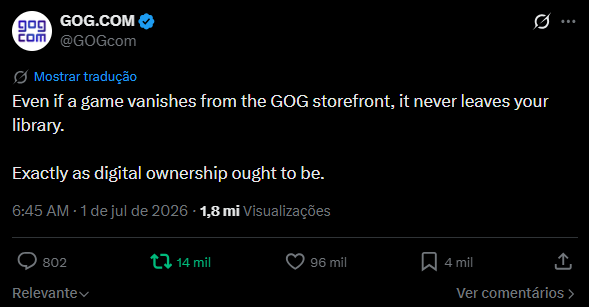
Fortunately, notable exceptions in the industry prove that going digital doesn’t have to be a dystopian trap. Platforms like GOG, for instance, sell games 100% DRM-free — meaning you truly own your installer files, and they work completely offline forever. Even Steam, despite using DRM across most of its catalog, has historically respected user libraries and wallets far more than console publishers ever have.
When a digital storefront dies — as will happen with the PS3 and PS Vita —, a chunk of video game history dies with it. Without physical discs or true file ownership (like DRM-free installers), our industry’s collective memory ceases to belong to players and becomes the proprietary hostage of corporate boardroom committees.
In an all-digital monopoly, retail competition vanishes, discount battles disappear, and above all, you lose the fundamental right to resell, lend, or trade your games. The price tag is whatever the publisher dictates on their single, walled-garden store, period. If you ever want to play something that fell out of rotation or had its servers turned off, your only hope will be praying for an overpriced, cash-grab remake years down the line.

Did you appreciate this critical essay? Leave your endorsement: